

The Afar people, also known as the Danakil, are a resilient Cushitic ethnic group with a culture shaped by the arid landscapes of the Horn of Africa. Unlike the Highland cultures of central Ethiopia, the Afar are predominantly Sunni Muslim, and their nomadic lifestyle revolves around pastoralism and the ancient salt trade. To visit the Afar region is to enter a society that deeply values “filla,” or respect, and “maru,” or hospitality. Travelers should approach with a sense of humility, recognizing that the Afar have survived in one of the earth’s harshest environments through strict social cohesion and deep knowledge of their land.
Social Etiquette and the Right-Hand Rule
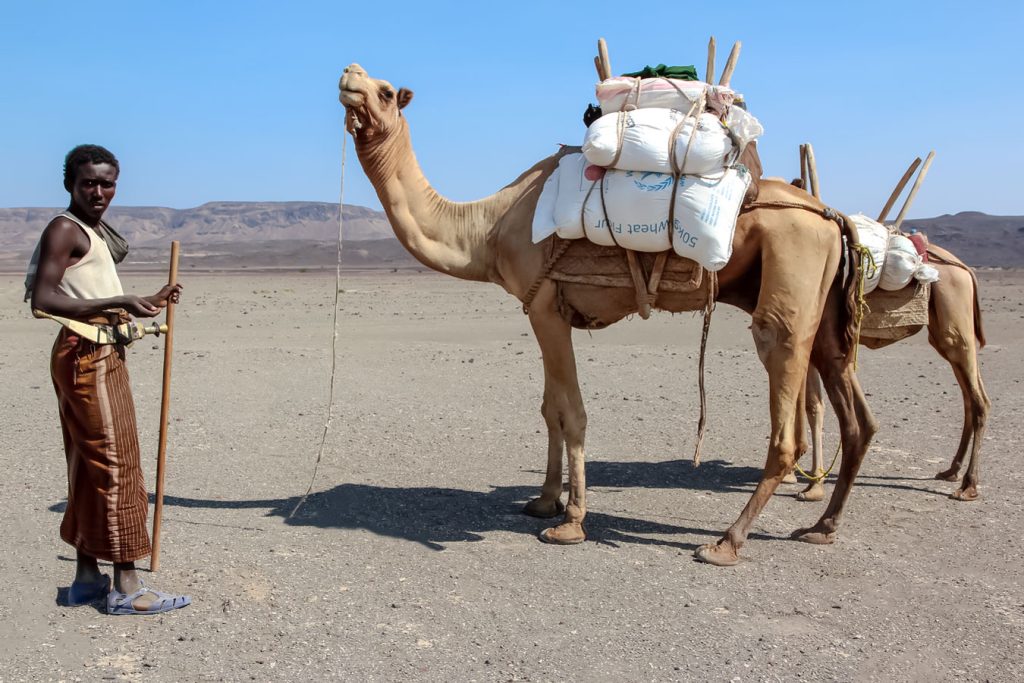
Afar society operates on a foundation of modesty and respect for seniority. One of the most critical rules to follow is the “right-hand only” rule for all social interactions. The left hand is strictly reserved for personal hygiene and is never used to eat, pass objects, or greet others. When you arrive at an Afar encampment or village, you should always seek out and greet the elders first, as they are the decision-makers and protectors of the community. Greetings are extensive and formal; it is standard to ask about the person’s health and their livestock, as herds are the primary symbol of wealth and survival. While handshakes are common between men, a foreign man should wait to see if an Afar woman initiates a greeting; if not, a respectful nod is the best course of action.
Hospitality, Diet, and the Coffee Rite
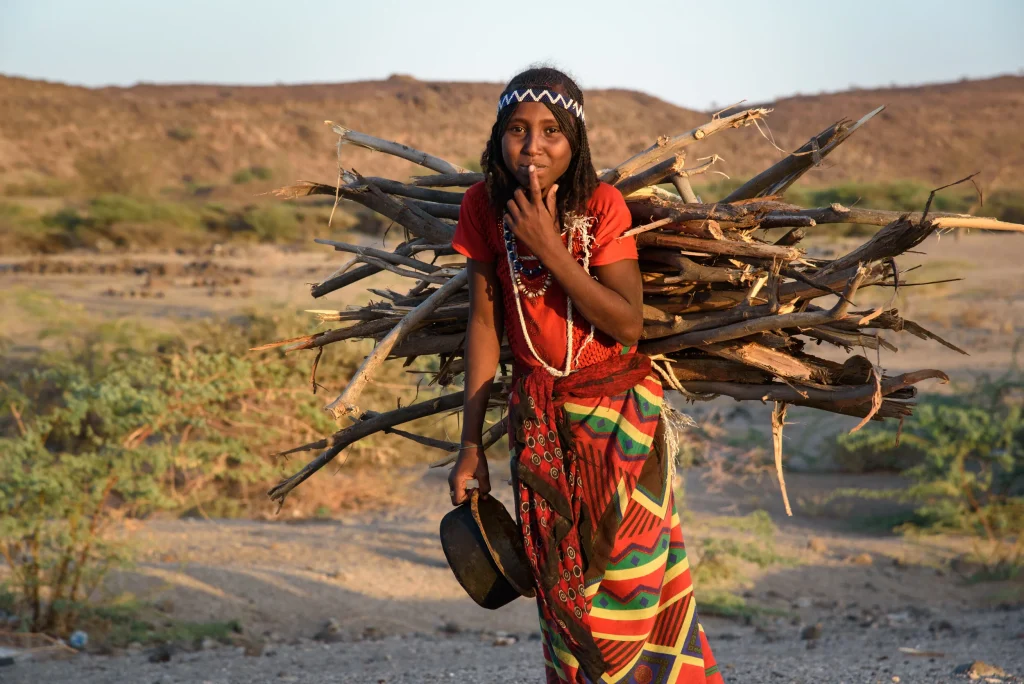
In the Afar region, hospitality is not just a gesture but a duty. While the coffee ceremony is celebrated throughout Ethiopia, the Afar version often reflects their nomadic constraints. You will likely be served coffee in three rounds—traditionally called Abol, Tona, and Baraka—and it is considered a significant slight to leave before the third cup, which represents a final blessing. Because the Afar are pastoralists, their diet is heavily based on milk and meat. Being offered fresh, warm milk is a sign of extreme trust and protection; once you drink it, the host considers you under their personal guardianship. When eating communally from a shared platter, remember to stay within your “sector” of the dish and accept Gursa—a hand-fed morsel from your host—as an act of friendship that should never be refused.
Modesty, Dress, and Nomadic Sensitivity
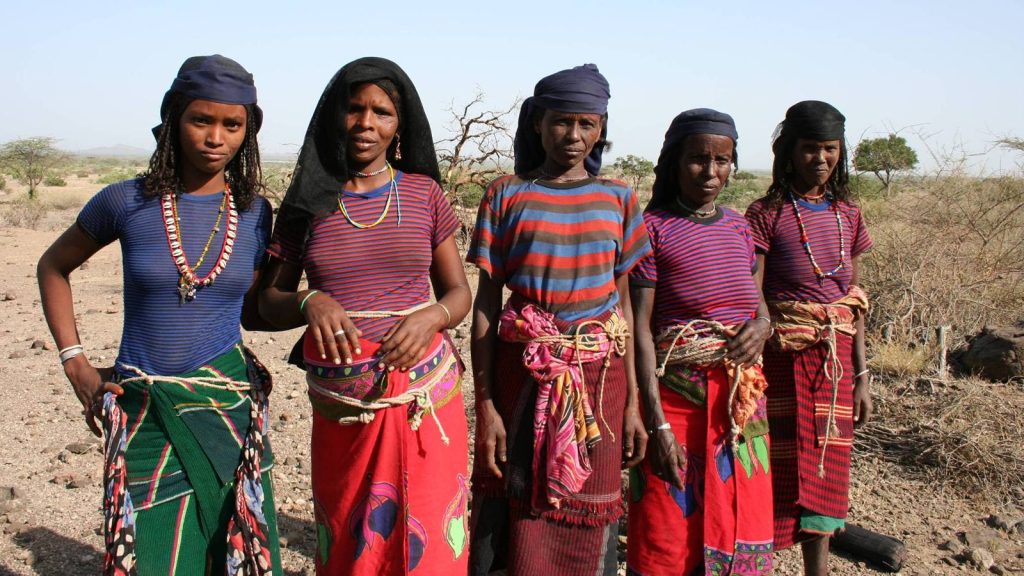
The Afar people are very conservative, and your attire should reflect that. Modesty is the primary way to show respect for their Islamic faith and traditional values. For women, this means wearing loose-fitting clothing that covers the shoulders and legs down to the ankles; carrying a headscarf is essential for sun protection and for showing respect when entering communal spaces. For men, while shorts are technically allowed, wearing long trousers is more respected. It is also important to understand that the Afar are a proud and protective people. Always ask for permission before taking photos, particularly of women or livestock, and never enter a grazing area or an “ari” (nomadic hut) without an invitation from the head of the family.
Practical Preparation for the Interior
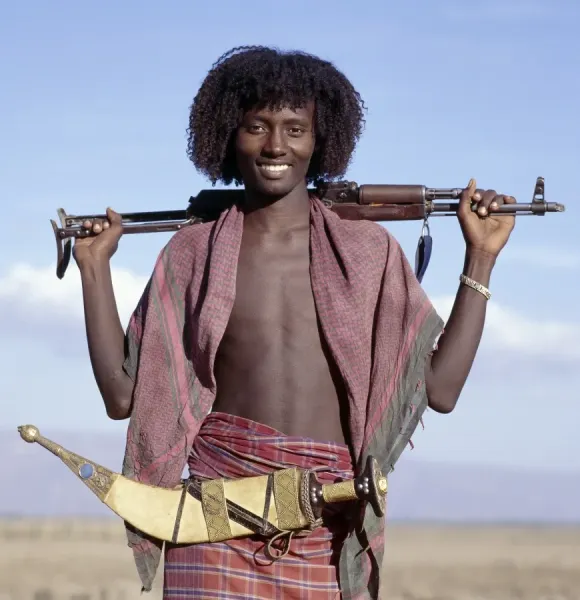
Traveling in the Afar region is a rugged experience that requires a specialized approach. Because the region is a decentralized nomadic territory, you should always travel with an accredited Afar guide who can act as an intermediary with clan leaders. Alcohol is generally not part of the local culture and should be avoided to respect the Islamic values of the region. Outside of major towns like Semera or Asayta, resources are extremely limited. You must carry all your own essentials, including high-SPF sunscreen and hand sanitizer. Patience is your most valuable asset here; in the desert, things move at a pace dictated by the heat and the needs of the herds, so allow for flexibility in your schedule.